Star Cleaning
Assignment
For this assignment, the goal was to make a physical game based on an existing IP, in this case a randomly assigned animated short. I was assigned the short La Luna (2011) produced by Pixar.
The primary purpose of the short is to show that different generations will have their own ways of completing the same tasks, and that no way is inherently better than another. The task that the characters in the short are trying to complete is cleaning stars off the surface of the moon, changing the moon from appearing full to appearing as a crescent. Since fitting the message about generational differences would be a significant challenge to integrate into a simple game made in a few weeks by one person, I decided to make the main focus the part about cleaning stars off the moon.
This was assigned as a group project, though my group members flat out refused to help me on any part of it because, according to one of them, “I know you will do it anyway even if we don’t help.” I choose to take this as a strong endorsement by my peers of my strong work ethic, reliability, and quality of artistic vision.
Regardless of how I choose to interpret my group member’s indifference it still posed a major challenge to completing the project on time as I was effectively doing 3 people’s work on my own. Despite this, I did not compromise the integrity of the game by making it super simple or by cutting corners to skirt this challenge.
Game Design
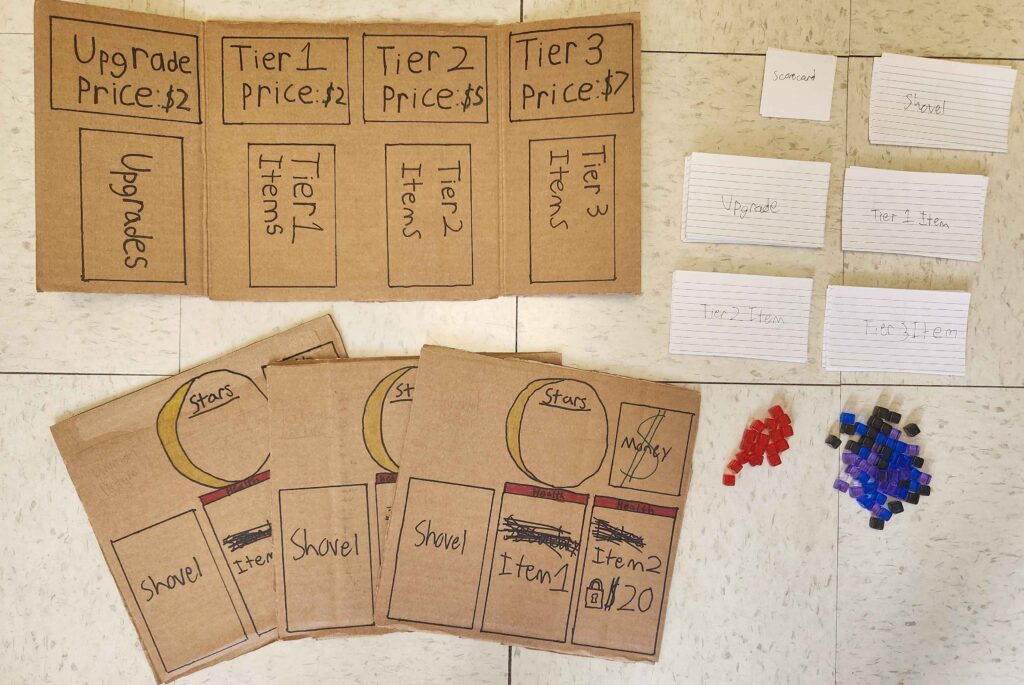
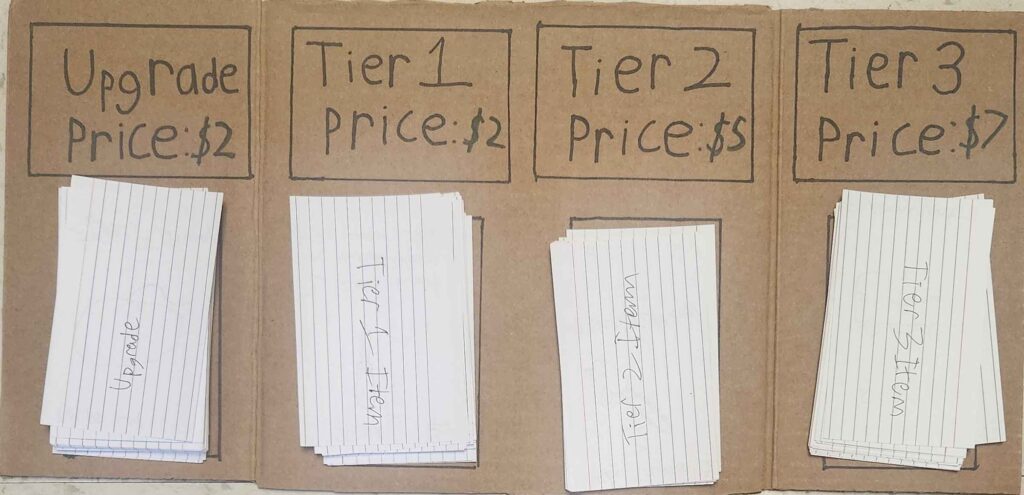
Star Cleaning is a card game for 2 or 3 players in which players try to be the first one to clean all the stars off their moon. Players remove stars by using items, gaining money for each star removed. Players can then use that money to purchase from decks with items of differing strength based on price, or to buy upgrades that can be attached to items. There are also some items and upgrades that can be used to sabotage your opponent’s progress.
During brainstorming for Star Cleaning I knew the goal would be removing stars from the moon to keep the goal in line with what happened in the short. Besides that, I wanted to find other ways to theme the gameplay around the short. I decided the best way to do this was by including all the objects that appear in the short in the game, such as the character’s brooms, hats, boat, and more. All of these objects appear in Star Cleaning as either items or upgrades. A few of these items are intentionally designed to be some of the most desirable in the game. I also figured creating a card game would be an elegant way of including all of these objects naturally in a game, which is why I decided on a card game instead of something else.
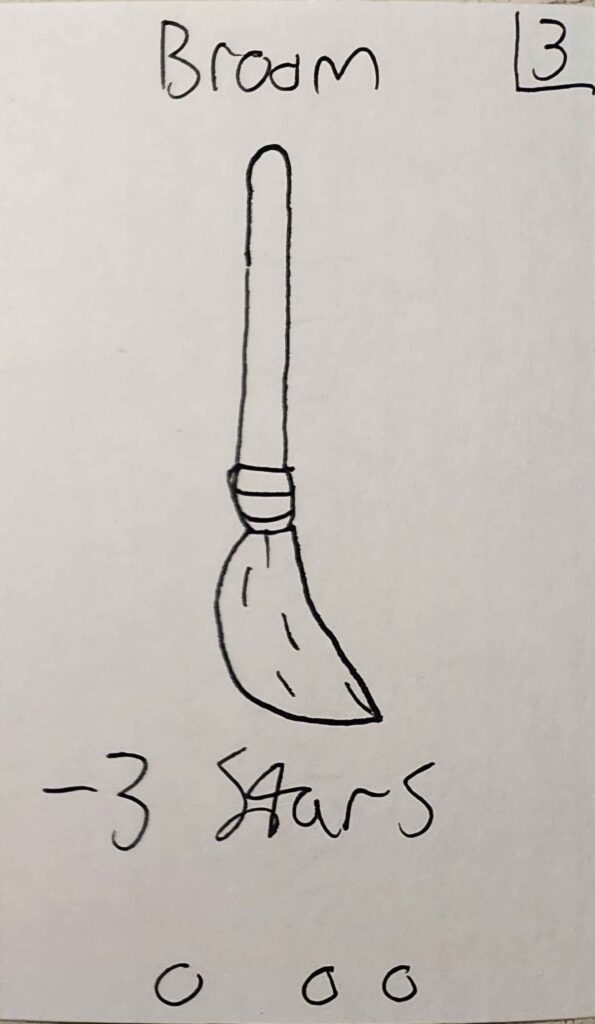
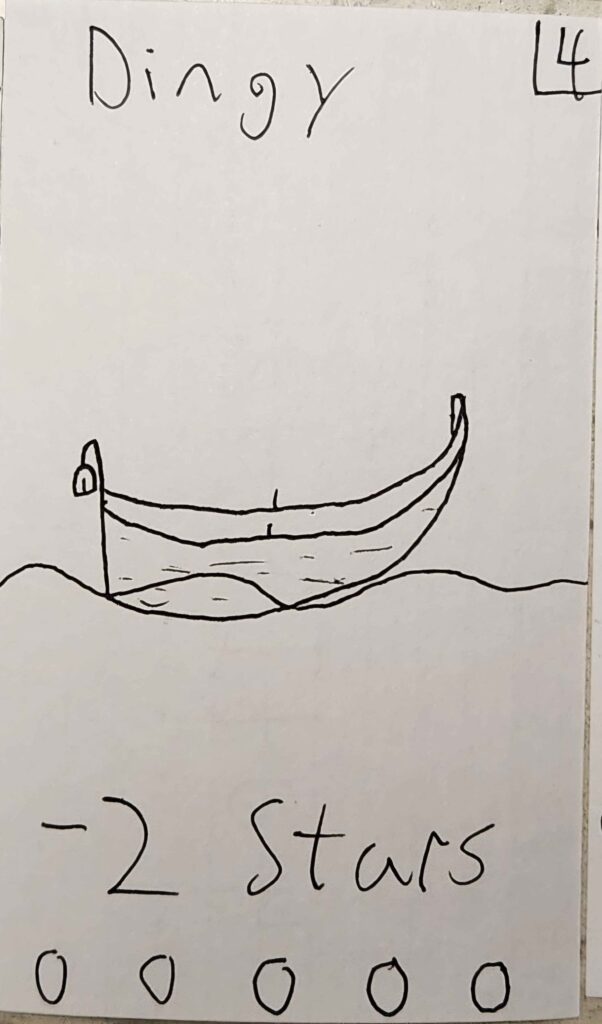
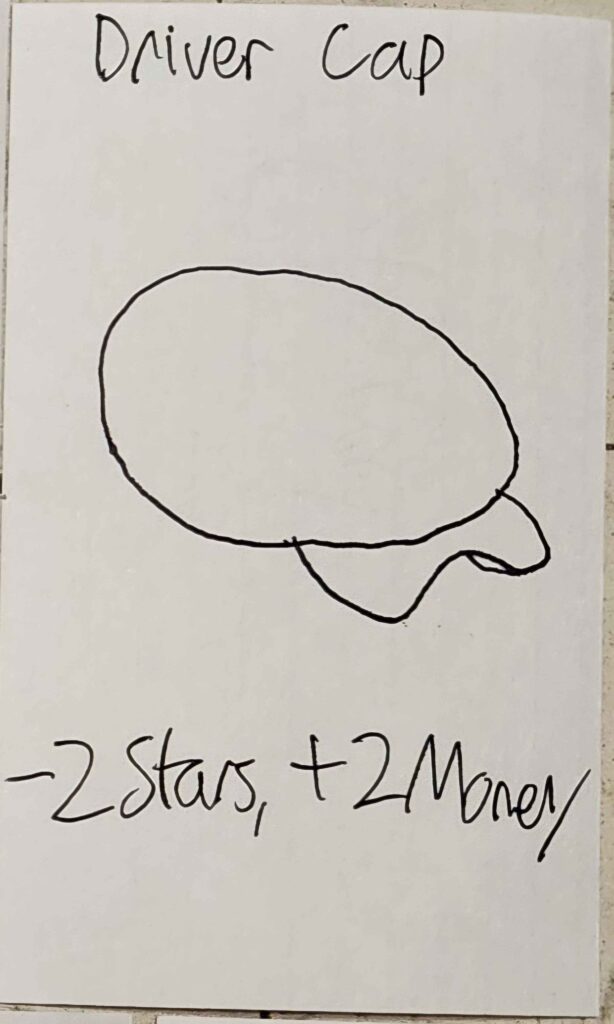
I worked on balancing the game around allowing players to feel like there is a meaningful progression. The desire for progression is where the different tiers of items come from. Over the course of the game, the speed at which players can remove stars ramps up quite a bit, as does the amount of money they make. By the end of the game, players will be making enough money to use the expensive tier 3 items consistently. These items are clearly stronger than the tier 1 and 2 items, so by the time the player reaches tier 3 they feel as if they have progressed during the game.
Another element I really wanted to make work was the upgrades. The way I saw it, the most fun you could have in the game is when using a strong item with lots of upgrades on it. It took a lot of my own testing and tweaking the numbers on the upgrades as well as the amount of each upgrade card in the deck to make it all fair, and the result is that saving and stacking upgrades feels strong but is not game breaking (and in my opinion is the most fun part of the game.) I also made upgrades the cheapest thing to buy from the shop in the hopes that it encouraged players to interact with them more in the hopes of improving their overall experience.
Playtesting
The game was improved significantly by what I observed in the playtests. I ended up changing a lot between iterations in both balance and mechanics.
One element that changed a lot over the course of development was the rules document. I worked a lot on changing the language and format so that the rules would be as readable as a pdf could be, but this did not help that reading a pdf is boring. Being bored reading the rules is a comment that almost every playtester made. I ran into this same problem with Go, Panda!, and it inspried me to make a whole new rulebook in Canva. Even though the information was exactly the same between the original document and the rulebook, everyone agreed that the rulebook was significantly better. As for Star Cleaning, I know all the information in the rules document is necessary and that the language is simplified as much as is reasonable, but it is still just a pdf. I simply did not have the time to make a rulebook like the one for Go, Panda! since I was working alone.
Observations from playtests also led to a few mechanical changes. Mechanics such as variable shop prices, using physical tokens to mark how many upgrades are on an item, and placing health cubes directly on the cards were all removed by the final version. I also ended up removing some items and upgrades if I thought they were superfluous to the overall experience. Luckily, at no point in playtesting did a player find any game breaking edge cases with card interactions. I was successfully able to foresee the game breaking combinations and change the text on the cards to make sure they weren’t possible.
To further improve the player experience, I asked after each playtest what kinds of items or upgrades they would like to see added to the game. Every single response I got to this question described something that already existed in the game as part of a card they just happened to not draw. There are two conclusions I draw from this. First, you need to play multiple times to see everything the game has to offer, which is definitely a good thing. Second, players will be pleased when they do get to see a new card for the first time as they were designed in line with what they hoped to see.
If given another change to iterate on this game, I would mostly focus on cosmetic changes. Currently, the game is made out of cardboard and index cards as those were the materials I could easily access. The cards were all drawn in black pen as I don’t own any kind of colored drawing tools. With more time and materials I would want to make the playmats more colorful and consistent in their designed. More importantly, I would want the cards to be more colorful and made of something higher quality than the cheapest possible index cards. The feel of the cards is very important to the experience of a card game, after all.